Over Ten Years of Impact in Northern Communities
Since its inception in 2015, Gakino’amaage: Teach for Canada has stood at the frontier of educational equity, working tirelessly to ensure that students in remote First Nations communities have access to high-quality, culturally responsive education. Over a decade of deep commitment, the organization has grown significantly—a testament to its enduring legacy and the vital support it provides to teachers, leaders, and community partners across Canada.
The Challenge: Balancing Rapid Growth with Operational Harmony
With ten years of rapid expansion came a natural nonprofit milestone: a sprawling digital ecosystem. Across GTFC’s nine interconnected departments—spanning teacher recruitment, educator development, community engagement, and fundraising—tools began to multiply. Valuable data and operational workflows became divided across disconnected platforms like Salesforce, ClickUp, Dropbox, Google Workspace, and Tableau.
The leadership team recognized that to sustainably scale their impact for the next decade, they needed to bridge these operational gaps. They required a holistic strategy to clean up data silos, eliminate manual bottlenecks, and cut unnecessary software costs—all while deeply respecting the unique cultural rhythms and daily realities of each individual team. They didn’t just want a rigid tech manual; they wanted a warm, human-centered roadmap toward digital sustainability.
The Solution: An Assessment Built on Listening and Empathy
SwiftCore partnered with GTFC to conduct a comprehensive, ground-up organizational and technology assessment. We knew that software is only as good as the people using it, so our methodology began with deep listening. Over several weeks, we conducted collaborative workshops and consultations with every department. We focused on uncovering not just how tools were being used, but why they were chosen, capturing the genuine sentiment, pain points, and capacity needs of the staff.
As documented in the GTFC Technology Assessment Report, we synthesized these insights to architect a comprehensive, 3-year strategic plan focused on three core pillars: standardization, centralization, and collaboration.
Our strategic framework included:
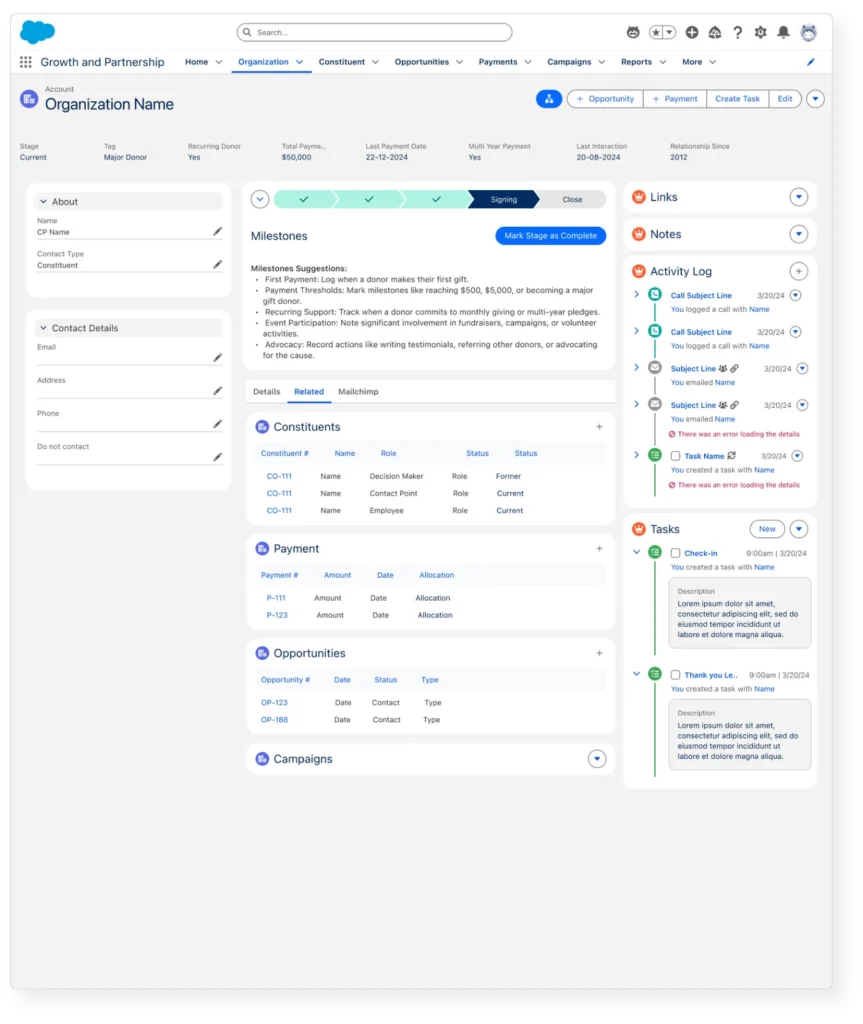
- Salesforce Optimization: Redesigning their core CRM around a unified, contact-centric data model to connect the entire teacher and donor lifecycle into a single source of truth.
- Centralizing Collaboration: Maximizing ClickUp by setting up structured internal request forms and reusable project templates to ease the administrative burden on support teams like Impact & Learning and Communications.
- Streamlining Document Storage: Building a plan to migrate over 2TB of data away from Dropbox into a standardized, securely permissioned Google Drive ecosystem using the free Google Workspace for Nonprofits tier.
- Democratizing Insights: Recommending a consolidation of reporting platforms to Power BI, allowing GTFC to share live, interactive performance dashboards across teams seamlessly without burdensome individual viewer licensing fees.
GTFC truly took these recommendations to heart. Partnering directly with SwiftCore to bring the roadmap to life, the organization successfully consolidated its digital ecosystem within Google Workspace and seamlessly migrated over 2TB of historical files from Dropbox and other fragmented sources into secure, highly organized Google Shared Drives. Today, they are also well on their way to standardizing their organizational reporting on Power BI.
The Brighter Outcomes
The resulting 3-year roadmap gave GTFC leadership the hard proof and structured clarity needed to drive meaningful, sustainable organizational change. By designing the technical evolution around the actual heartbeat of their staff, SwiftCore set the stage for an incredibly bright, connected future.
- A Compass for Digital Sustainability: GTFC emerged with a clear, phased 3-year roadmap tailored strictly to organizational reality rather than generic technology trends, outlining immediate quick wins and long-term milestones.
- Reclaimed Capacity for the Mission: By mapping out automated handoffs between departments (such as the transition from Recruitment to Teacher Development) and standardizing task tracking, staff can spend less time wrestling with duplicate entries and more time focusing on northern communities.
- A 360-Degree View of Community Impact: The centralized Salesforce data model lays the groundwork for seamless cross-departmental visibility, securely linking applicant journeys, program session attendance, and donor stewardship.
- Cost-Effective, Accessible Analytics: The transition to Power BI ensures that leadership, directors, and external stakeholders gain instant, real-time visibility into strategic goals and program reach without friction or prohibitive costs.
- Empowered and Agile Teams: Setting up voluntary data committees and designing tailored learning paths inside TalentLMS ensures that staff continuously upskill and build confidence together, fostering long-term digital independence.
With a solid digital foundation beneath them, the wonderful team at Gakino’amaage can move forward into their next decade of service with absolute operational confidence, keeping their focus exactly where it belongs: nurturing education and learning across Canada.